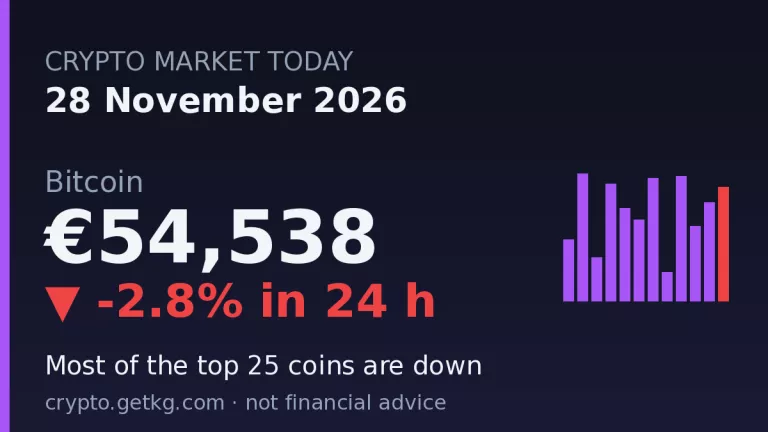
Bitcoin fell to a four‑month low near $62,000 on Thursday, extending a market‑wide sell‑off that began earlier this week. The dip follows a two‑week outflow of $2.35 billion from Bitcoin exchange‑traded funds (ETFs) and a stalled mid‑term sweep of a US crypto‑focused bill.
Key facts
- Bitcoin price touched roughly $62,000, its lowest level since November 2023 (Cointelegraph).
- Bitcoin ETFs lost $2.35 billion in net assets over the past 14 days, with BlackRock’s fund recording its 11th consecutive week of outflows (Cointelegraph).
- The broader crypto market saw liquidations exceed $1 billion as prices slipped below $70,000 (StoneX).
- A mid‑term sweep of a US crypto‑regulation bill stalled in Congress, adding regulatory uncertainty (StoneX).
- Bitcoin’s price remains volatile; this is not financial advice.

Why it matters to holders
For everyday investors, a sudden price drop can erode portfolio value and trigger margin calls on leveraged positions. The large ETF outflows suggest institutional confidence is waning, which can amplify retail panic selling. Moreover, the stalled legislation means the regulatory landscape remains unclear, potentially delaying the introduction of clearer rules that could stabilize the market. If you hold Bitcoin directly, the price swing underscores the importance of risk‑management tools such as stop‑loss orders and diversification.
Details of the sell‑off
| Metric | Figure | Source |
|---|---|---|
| Bitcoin price low | ~ $62,000 | Cointelegraph |
| ETF net outflows (2 weeks) | $2.35 B | Cointelegraph |
| BlackRock ETF weekly outflow streak | 11 weeks | Cointelegraph |
| Total crypto liquidations (24 h) | > $1 B | StoneX |
| Bitcoin price below | $70,000 | Serrari Group |
The ETF outflows are notable because they reflect a shift in institutional sentiment. BlackRock’s iShares Bitcoin Trust, the world’s largest Bitcoin ETF, has seen investors pull money for the eleventh straight week, indicating that even the most regulated crypto products are not immune to market stress.
At the same time, the broader market saw over $1 billion in liquidations across futures and margin positions, a figure highlighted in our earlier coverage of crypto liquidations passing the $1 billion mark. Such forced selling can create a feedback loop, pushing prices lower and triggering more liquidations.
Regulatory background
The sell‑off coincides with a stalled mid‑term sweep of a US crypto‑focused bill that aimed to provide clearer guidance for digital asset issuers and custodians. According to StoneX, the legislative effort stalled in Congress, leaving the market without a definitive regulatory roadmap. This uncertainty compounds the impact of other global regulatory developments, such as the EU’s MiCA framework and the SEC’s ongoing scrutiny of crypto‑related securities.
Regulatory ambiguity often fuels volatility, as investors react to the possibility of stricter rules or delayed approvals for products like Bitcoin ETFs. For holders, staying informed about upcoming policy decisions—whether in the US, EU, or other jurisdictions—can help anticipate market moves.
What’s next
- ETF flows: Watch weekly net asset changes for the major Bitcoin ETFs, especially BlackRock’s iShares Bitcoin Trust. A reversal of outflows could signal renewed institutional confidence.
- Legislative activity: Monitor the US Congress for any revival of the crypto‑regulation bill or new proposals from the SEC. Any progress could provide a market floor.
- Liquidity events: Keep an eye on large‑scale liquidations, which may intensify if Bitcoin breaks key support levels (e.g., $60,000).
- Global regulation: Follow developments in the EU’s MiCA implementation and any SEC rulings on Bitcoin futures or spot ETFs, as they can affect both retail and institutional demand.
FAQ
Why did Bitcoin ETFs lose so much money?
Investors withdrew $2.35 billion over two weeks, likely reacting to the broader market decline, concerns over regulatory clarity, and the recent performance of Bitcoin itself.
Does a stalled crypto bill mean more volatility?
Yes. When legislation stalls, uncertainty remains, which can keep market participants cautious and prone to rapid sell‑offs.
How can I protect my Bitcoin holdings during a sell‑off?
Consider using stop‑loss orders, diversifying into other assets, and staying updated on regulatory news. For a deeper dive on risk management, see our guide on Crypto Risk Management: Position Size, Diversification and Rules.
— Crypto is volatile, this is not financial advice.
Sources: Cointelegraph.com News, Serrari Group, StoneX.
Cover image: Image: stevepb / Pixabay.